Inger Hagerupová. Rozhlasová hra. Překlad z norštiny do švédštiny Olle Mattson.
Natočeno 1953. Premiéra 6. září 1953. Repríza 21. října 1953; 11. února 1961.
Text in: Hagerup, Inger: En te med citron. Sveriges Radio, 1961, 76 s.
Inger Hagerupová. Rozhlasová hra. Překlad z norštiny do švédštiny Olle Mattson.
Natočeno 1953. Premiéra 6. září 1953. Repríza 21. října 1953; 11. února 1961.
Text in: Hagerup, Inger: En te med citron. Sveriges Radio, 1961, 76 s.
Vlastimil Venclík. Původní rozhlasová sarkastická komedie. Překlad Peter Ball. Dramaturgie Dietrich Grollmitz. Technická spolupráce Helga Schlundt. Režie Fritz Ernst Fechner.
Osoby a obsazení: Arnold Novák (Dieter Wien), Eugen Novák (Gerd Grasse), Elisabeth (Franziska Troegner), zdravotní sestra (Eva Schäfer), lékař (Gerd Michael Henneberg), řidič (Horst Gill), ošetřovatel (Edgar Harter).
Nastudoval Rundfunk der DDR v roce 1984. Premiéra 10. 3. 1985 (DDR, 14:00 h.; 55 min.).
Česká inscenace
Pozn.: Novak und Novak erwachen aus tiefer Bewusstlosigkeit nebeneinander im Zimmer eines Krankenhauses – Opfer eines Zusammenstoßes ihrer beiden Autos. Mit Witz und Humor exemplifiziert der Autor an zwei sehr unterschiedlichen Lebenshaltungen Ursachen und Wirkungen kleinbürgerlichen Fehlverhaltens und führt seine Hörer so zum Nachdenken über Widersprüchliches in unserem Alltag. Ein Originalhörspiel aus der Tschechoslowakei. (anotace)
Jochen Hauser. Rozhlasová hra. Hudba Rolf Zimmermann. Dramaturgie Wolfgang Beck. Technická spolupráce Klaus Bechstein, Barbara Miekies. Asistent režie Manfred Otto. Režie Fritz-Ernst Fechner.
Osoby a obsazení: Fritz Trebinski, kapelník (Norbert Christian), Manne Bär, druhý trumpetista (Hans-Georg Thies), Alfons Petruschka, pozounista (Walter Lendrich), Huster, bubeník (Hans-Joachim Hanisch), ředitel kombinátu (Dieter Wien), Richard, člen závodního výboru (Erik S. Klein), Müller, člen vedení závodu (Christoph Engel), účetní, ekonomka (Petra Kelling), Schulze-Becher, profesionální pozounista (Hans Knötzsch), paní Bärová, Manneho manželka (Brigitte Krause), Otto, muzikant – samouk (Joe Schorn). Dále účinkují Johannes Maus, Dietmar Obst a Hanna Rieger.
Nastudoval Rundfunk der DDR v roce 1971. Premiéra 11. 8. 1971 (DDR, 20:05 h.; 47 min.).
Doslovný překlad názvu: Zvuk pozounu
Pozn.: Die einzige Posaune des nur noch sieben Mann starken, aber traditionsbewußten Bergbaublasorchesters „Glückauf“ wird von einem Auto überrollt. Es wird Ersatz gesucht. Im Verlauf dieser Suche kommen sich die Mitarbeiter des neuen Chemiekombinats sowie des Tagebaus, der nun auch dazu gehört, näher. Vor dem Hintergrund alter Interessen und Gewohnheiten werden Themen wie Umschulung und Qualifizierung thematisiert. (anotace)
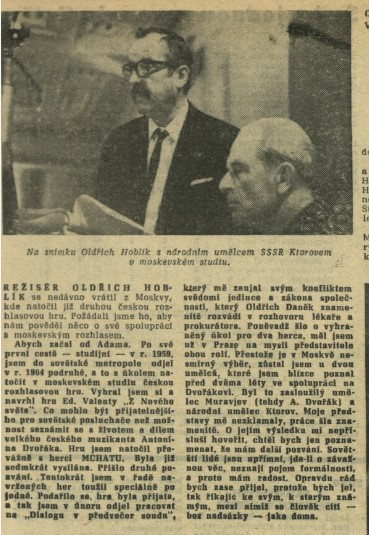
Edvard Valenta. Rozhlasová hra. Režie Oldřich Hoblík j. h.
Osoby a obsazení: Antonín Dvořák (Muravjev) a další.
Natočeno 1964 (Moskva).
Lit.: anonym: Režisér Oldřich Hoblík… In Čs. rozhlas a televize 14/1967, s. 16 (článek).
Charlotte E. English. Kompletní audiokniha.
Čte Wayne June.
Natočeno 2022. Vydal Frouse Books 27. 7. 2022 (1 CD MP3, celková délka 2 hod. 59 min.). Ukázka k poslechu zde.
Série: Malykant Mysteries # 1
Pozn.: Detective. Judge. Executioner. In an icy, Victorianesque world, a harsh god rules, and He has one law: a life for a life. Konrad Savast is the Malykant: detective, judge and executioner in one. It’s kill and be killed in Konrad’s world, and his unhappy duty to mete out his Master’s implacable justice. The body of an aristocrat lies in the mist-shrouded reaches of the Bone Forest. Her killer has signed their own death warrant, but first, Konrad must learn who could have wanted the delightful Lady Rostikova dead…
Scénář Piotr Rogoża a Krzysztof Komander. Audio seriál. Zvuková spolupráce Grzegorz Gutkowski, Piotr Szwajgier. Střih a úprava dialogů Piotr Szwajgier. Záznam zvuku Szymon Rąpała. Mix a střih hudby Kamil Sajewicz. Produkce v zastoupení Audioteka – Rapid Panda Productions Katarzyna Rybska, Alicja Sajewicz. Jazyková úprava Andrzej Dudziuk. Literární dohled Katarzyna Piechocka, Ewa Kamińska. Vedení produkce Aleksandra Dąbrowska, Katarzyna Szybińska. Producentka Ewa Kamińska. Produkce Audioteka. Použité písně z knihovny Universal Music Poland.
Osoby a obsazení: Janek (Bartłomiej Topa), Zuza (Zuzanna Saporznikow), Karlos (Tomasz Ziętek), Mocny (Mirosław Zbrojewicz), Martyna Kramer (Maja Ostaszewska), Kramer (Janusz Chabior), Henryk (Marian Opania), Stanisław (Marian Dziędziel), Arnold (Adam Ferency), Bartek (Stanisław Cywka), Hanulka (Katarzyna Gniewkowska), Suchy (Arkadiusz Detmer), hlídač (Maciej Więckowski), Wasyl (Michał Piela). Dále účinkují Przemysław Bluszcz, Antoni Bogacki, Tomasz Bogacki, Marek Ciunel, Marcin Czarnik, Konrad Eleryk, Adam Fogiel, Grzegorz Gutkowski, Przemysław Glapiński, Henryk Gołębiewski, Piotr Jabłoński, Małgorzata Klara, Karina Kosznik, Kamila Kuboth-Schuchardt, Dorota Kolak, Dariusz Odija, Grzegorz Pawlak, Piotr Rogoża, Kamil Sajewicz, Wojciech Sieczkowski, Piotr Szwajgier, Philippe Tłokiński, Piotr Witkowski, Alicja Wojnowska, Filip Wus oraz trenerzy i zawodnicy Uniq Fight Club: Kamil Paczuski, Jakub Rokicki, Bartosz Bogucki, Krzysztof Klencner.
Natočeno 2024. Webová premiéra 1. dílu duben 2024 (Audioteka.pl). Ukázka k poslechu zde.
Pozn.: Audioserial roku 2022 wraca z nowym sezonem! Gdy wydawało się, że szalony plan Henryka powiódł się na przekór wszystkim, karta niespodziewanie się odwróciła. Janek znajduje się w fatalnym położeniu: wrócił za kratki, a jego konflikt ze współwięźniami eskaluje. Wówczas z Jankiem kontaktuje się niedawny przeciwnik, Mocny, i składa propozycję nie do odrzucenia.
Rozpoczyna się gra o życie Janka i jego bliskich. Sojusze okazują się płynne, motywacje dwuznaczne, a najcenniejszą walutą staje się zaufanie. Czy Janek odnajdzie się w nowej rzeczywistości? Jaka rola w intrydze Mocnego przypadnie wnuczce Henryka, przebojowej Zuzie? Co do powiedzenia będzie miał Kramer? I czy Henrykowi jeszcze raz uda się wszystkich przechytrzyć? Nowy odcinek w każdy wtorek. (anotace)
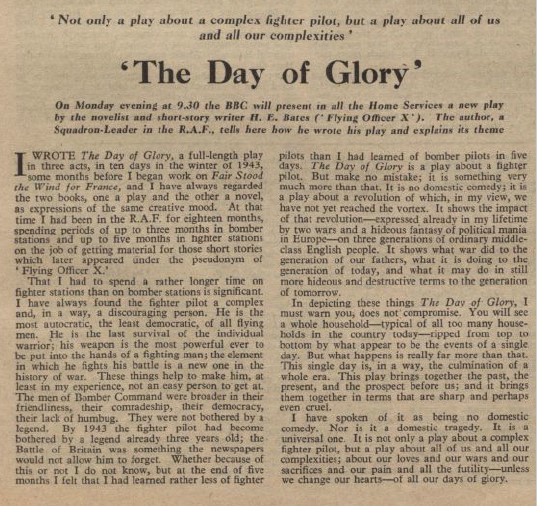
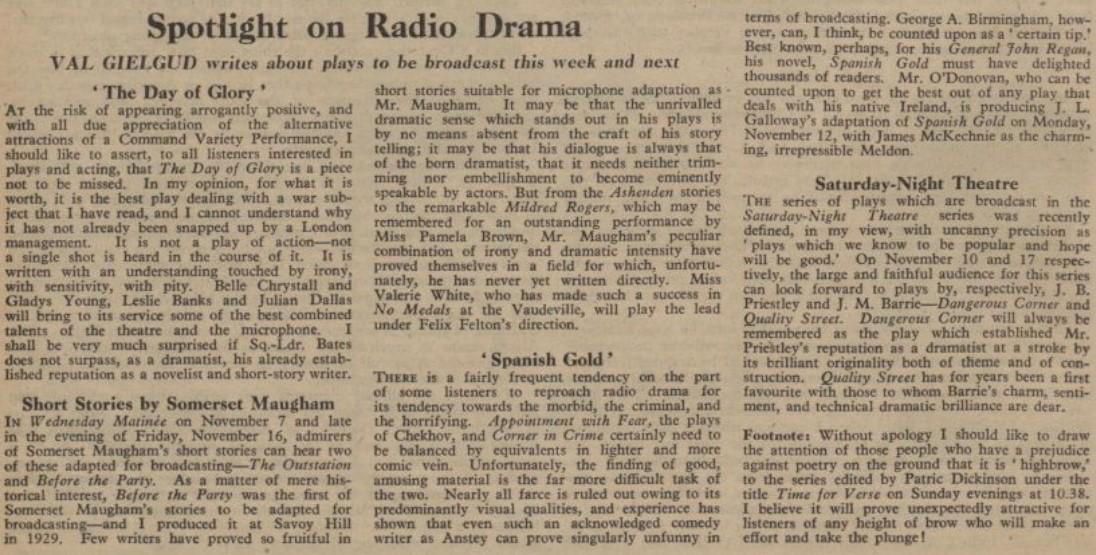
H. E. Bates. Rozhlasová úprava divadelní hry o třech jednáních.
Natočeno 1945. Premiéra 5. 11. 1945 (BBC Radio).
Text in: Bates, HE: The Day of Glory: A Play in Three Acts. Michael Joseph, 1945, 79 s.
Lit.: Bates, HE – The Day of Glory. In Radio Times, 2. 11. 1945, s. 5 (článek). – (Bates) Popisuje svou válečnou službu u RAF na bombardovacích i stíhacích stanicích a komplikované psychologické rysy, které na nich pozoroval. Píše, že „není to jen hra o složitém stíhacím pilotovi, ale hra o nás všech a všech našich složitostech… Uvidíte celou domácnost – typickou pro příliš mnoho domácností v dnešní zemi – vytrženou z shora dolů tím, co se zdá být událostmi jediného dne“…Ukazuje, co válka udělala s generací našich otců, co dělá s generací dnešní a co může způsobit v ještě ohavnějších destruktivní termíny pro generaci zítřka“.
 Lit.: anonym: Spotlight on Radio Drama. Val Gielgud writes about plays to be broadcast this week and next. In Radio Times, 2. 11. 1945, s. 4 (článek).
 (more…)
Oficiální podcast Památníku Osvětim.
Natočeno 2021-2024. Webová premiéra 1. dílu 19. 5. 2021 (Spotify, 28 min.). K poslechu zde.
Pozn.: The official podcast of the Auschwitz Memorial. The history of Auschwitz is exceptionally complex. It combined two functions: a concentration camp and an extermination center. Nazi Germany persecuted various groups of people there, and the camp complex continually expanded and transformed itself. In the podcast „On Auschwitz,“ we discuss the details of the history of the camp as well as our contemporary memory of this important and special place. (anotace)
Eberhardt Panitz. Rozhlasová hra. Hudba Siegfried Matthus. Dramaturgie Rosemarie Zeplin. Technická spolupráce Jürgen Meinel, Ingeborg Rethmeyer. Asistentka režie Ingeborg Milster. Režie Fritz Göhler.
Osoby a obsazení: Santes (Horst Drinda), Aleta (Sabine Krug), starý muž (Hans Hardt-Hardtloff), číšnice (Berti Deutsch), řidič (Werner Kamenik), řidič cisterny (Johannes Knittel.)
Nastudoval Rundfunk der DDR v roce 1963. Premiéra 25. 7. 1963 (DDR, 19:51 h.; 51 min.).
Pozn.: Der Kunstwissenschaftler Santes hat sich auf die Insel Kuba zurückgezogen, um Kriegen und Revolution in Europa auszuweichen. Er, der passiv bleiben und Kunstwerke für die Menschheit bewahren will, wird auf die Seite der illegal kämpfenden kubanischen Volksbewegung gezogen. (anotace)
43. dílu podcastu. Moderuje Yvonne Griesel.
Hovoří česká překladatelka Barbora Schnelle.
Natočeno 2024. Webová premiéra 19. 3. 2024 (PodBean, 39 min.). K poslechu zde.
Lit.: Schnelle, Barbora: The podcast Ãœber Ãœbersetzen builds a bridge between theory and practice. In Facebook, 16. 4. 2024 (status). – Cit.: The podcast Ãœber Ãœbersetzen builds a bridge between theory and practice. In the 43rd episode, I spoke with host Yvonne Griesel about my work as a theatre translator in the German-Czech context. We talked about the challenges involved in translating the feminist plays of Austrian author Elfriede Jelinek and Israeli playwright Sivan Ben Yishai into Czech or how to translate the plays by Czech playwright Roman Sikora, which criticise capitalism and are written in a derailed language, into German. And, of course, about what it means to live between several languages and what freedoms have to be fought for here. And about the advantages of collaborative working contexts! Thanks to all of you who has accompanied me, many of you from Drama Panorama.
Lit.: anonym (= Griesel, Yvonne?): Der Podcast über Ãœbersetzen. Eine Brücke zwischen Theorie und Praxis. Folge 43 – Ãœbersetzen für die tschechische Theaterlandschaft. In web Ãœberübersetzen,
Welche Auswirkung hatte es auf die tschechische Dramatik, dass Václav Havel nach der Wende Präsident wurde? Warum werden Roman Sikoras kapitalismuskritische Stücke nicht auf den großen Bühnen gespielt? Und wie bringt man seine besondere Sprache ins Deutsche? (more…)
Powered by WordPress